

As authoritarian governments tighten their grip on information, independent journalists from Iran, Russia and China are being forced to reinvent not only how they report, but how audiences access the truth itself.
During a panel on “authoritarian convergence” at the International Journalism Festival in Perugia, Italy, exiled media leaders described a rapidly evolving battle over censorship, surveillance and public memory — one where journalism has become as much about technological survival as storytelling.
Their governments, the speakers argued, are increasingly learning from one another: exporting censorship models, sharing surveillance practices and refining methods of internet control. In response, independent journalists are building their own cross-border networks of resilience.
“We’ve already decided that since our governments are sharing surveillance tech and best practices,” said Marketa Hulpachova, co-director of Tehran Bureau, “we should do the same.”
Reporting Through Blackouts
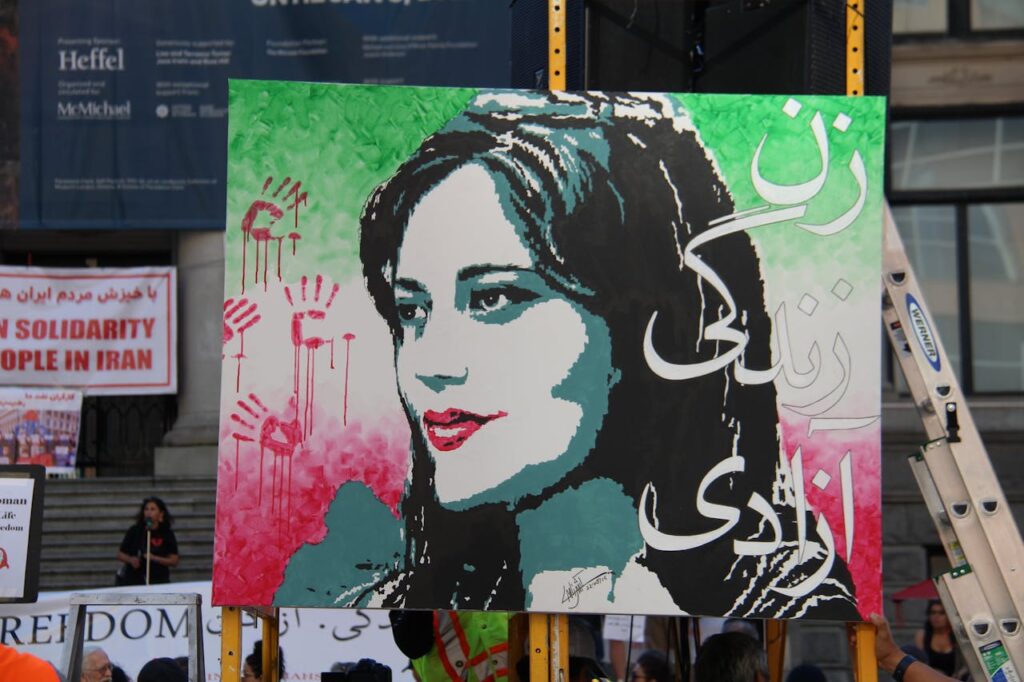
For the Tehran Bureau, founded in 2008 to provide independent reporting on Iran, surviving under repression has required constant adaptation. The outlet originally relied on underground correspondents inside the country working alongside editors abroad to create what Hulpachova described as a “more nuanced and realistic window” into Iran.
Today, amid prolonged internet blackouts and government crackdowns, the organization has added new security layers. Correspondents now operate outside the country while maintaining trusted networks inside Iran. Information is verified through triangulation, archives and years of accumulated investigative work.
Even during near-total shutdowns, information still circulates.
Hulpachova pointed to the growing use of Starlink routers inside Iran, which allow some users to bypass state internet restrictions. Trusted social media accounts, she said, also play a crucial role in documenting events in real time.
But the government maintains a structural advantage.
“While most of the population loses internet access,” she explained, “the government relies on whitelisted accounts to amplify its own narrative internationally.”
That asymmetry has transformed the role of exile media into something larger than conventional reporting: a struggle to preserve reality itself.
“We Became Very Good at Convincing People to Talk”

Russian investigative outlet Important Stories (IStories) has faced similar pressures since relocating into exile after the full-scale invasion of Ukraine.
The newsroom, known for long-form investigations and documentaries, now operates under extreme security protocols. Journalists still working inside Russia do so anonymously and separately from one another to reduce risks if detained.
Working with the outlet can carry prison sentences of up to five years.
Yet editor-in-chief Alesya Marokhovskaya said fear has not eliminated public demand for independent journalism. In some ways, she argued, censorship has increased audiences’ willingness to speak.
“People are exhausted from silence,” she said. “They tell us: ‘I don’t care that you’re a foreign agent. I just need someone to hear this.”
The outlet has developed technical workarounds to remain accessible inside Russia, including mirror websites hosted through Google infrastructure and a mobile app with a built-in proxy system that bypasses restrictions automatically.
At the same time, Important Stories has had to radically rethink how documentaries are produced. Interviews are often conducted remotely from abroad while a lone camera operator films inside Russia. Entire productions can take months as reporters carefully evaluate risks to sources and crew.
“There is no story worth someone’s life,” Marokhovskaya said.
Building a “Lighthouse” for Chinese Audiences
For Chinese journalist Vivian Wu, founder of Dasheng Media, the challenge is not only censorship but also fragmentation.
Her New York-based YouTube channel focuses on long-form interviews, oral histories and uncensored political conversations rarely seen in Chinese media ecosystems. Unlike the rapid-fire style of most social media platforms, Wu deliberately embraces slow, in-depth discussions.
One of her most successful videos, a three-hour conversation about China’s totalitarian system, has received more than 700,000 views.
“It’s very anti-social,” she joked.
Yet audiences inside China continue finding ways to access and redistribute her work through VPNs, screen recordings and reposted audio files on Chinese platforms.
Wu described her platform as a “lighthouse” for Chinese audiences searching for uncensored conversations.
“People know you are there — clear, loud, free,” she said. “They come to you because they are struggling in the darkness of censorship.”
She also warned international journalists against viewing China only through official state narratives or becoming paralyzed by fear of surveillance.
“Don’t be scared by the government,” Wu told the audience. “People are still there. Journalists are still there. They’re not gone, they’re hiding.”
Authoritarian Convergence and Journalistic Cooperation
Throughout the discussion, speakers repeatedly returned to the idea of “authoritarian convergence”: the growing cooperation among governments seeking to control information.
From internet shutdowns to AI-driven surveillance and propaganda distribution, authoritarian states increasingly share strategies and technologies across borders.
Reporters Without Borders director general Thibaut Bruttin argued that journalism must respond collectively.
“Press freedom predators are smart,” he said. “They evolve. They find new ways of assaulting the press.”
Bruttin warned that exile journalism is no longer a marginal phenomenon but an expanding global reality affecting entire media ecosystems from Russia and Iran to Nicaragua, Guatemala and El Salvador.
He also stressed that exile media does not merely serve diaspora communities; it remains one of the primary sources of information reaching audiences inside authoritarian states.
According to research cited during the panel, independent Russian exile media still reaches roughly 10 percent of Russia’s adult population.
Beyond Breaking News
One recurring theme united all three newsrooms: the understanding that exile media cannot compete with large international organizations on breaking news alone.
Instead, their strength lies elsewhere: in context, memory and explanation.
“We don’t have to compete with institutional media for information,” Wu said. “We can explain the system, the mechanisms, the perspectives.”
The panel closed with calls for greater collaboration between journalists covering authoritarian states, particularly on technical infrastructure, censorship circumvention and shared investigations.
As governments cooperate more closely to silence dissent, the speakers argued, journalists must do the same.
“If you step aside and wait,” Marokhovskaya warned, “they will kill us.”
____________________________________________________________________________
This article was developed with the assistance of AI using a transcription of the panel “Authoritarian convergence: how Russia, Iran and China reshape information ecosystems“, at the International Journalism Festival in Perugia. It was edited and reviewed for accuracy by a NEMO journalist.