
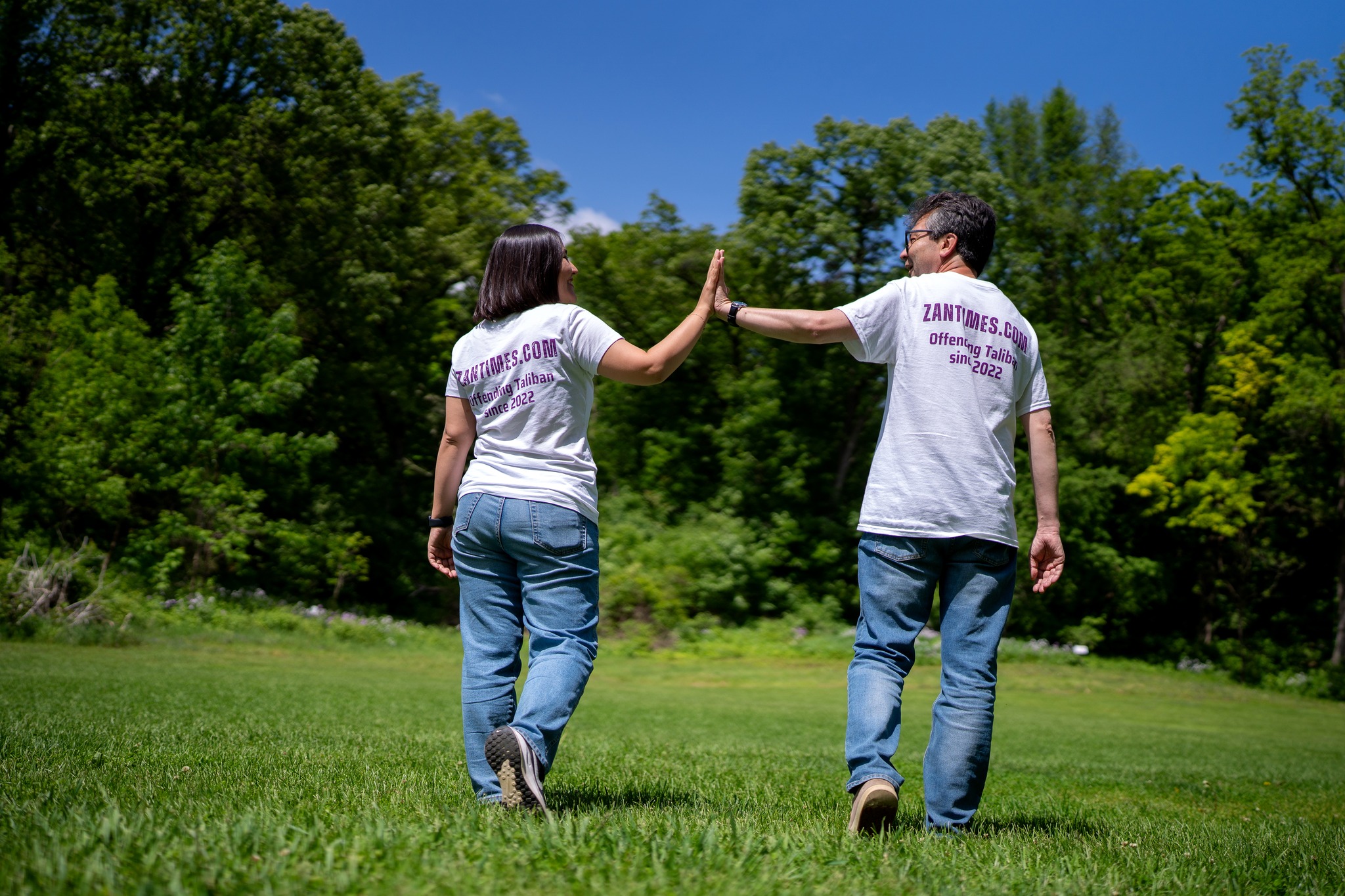
When the Taliban ordered women in Afghanistan to cover themselves from head to toe in public in May 2022, Zahra Nader was sitting in a coffee shop in Toronto, working on a university assignment.
She remembers crying after reading the news.
For Nader, the Taliban’s restrictions were not distant political developments. They reopened memories from her own childhood as a refugee in Iran after her family fled Afghanistan during the Taliban’s first period in power in the 1990s. As an Afghan refugee in Iran, she was denied access to education, an experience that continues to shape her journalism today.
“There was a survivor’s guilt,” Nader wrote this month in a public reflection marking four years since she first decided to build Zan Times. “The basic rights and freedoms I had known growing up were now being denied to millions of women and girls in Afghanistan.”
Nader has spoken publicly about how those experiences shaped both her reporting and her decision to create a newsroom centered on Afghan women’s voices. In an interview with The Good Men Project, she described how exile, displacement and exclusion from education continue to influence her work today.
“I wanted Afghan women to tell our own stories, in our own voices,” Nader said in the interview. “Too often, Afghan women are spoken about, but not heard directly.”
Nader, who previously worked with the Kabul bureau of The New York Times and has contributed to publications including Time, Foreign Policy and The Guardian, has also framed Zan Times as a response to the disappearance of women from Afghan media after 2021.
Building an Afghan women-led newsroom
In an interview with RNW Media, Nader said she wanted to create “a newsroom where Afghan women were not just subjects of journalism but its authors.”
Founded in exile in 2022 after the Taliban’s return to power, Zan Times was created to document human rights violations in Afghanistan, particularly those affecting women and marginalized communities.
The newsroom operates through a network of Afghan journalists working both in exile and, often anonymously, inside Afghanistan itself. According to the newsroom’s About page, its mission is not only to report on the country, but also to create opportunities for Afghan women journalists to continue working despite repression and displacement.
The name “Zan” means “woman” in Persian, and the outlet has become one of the most visible Afghan women-led media organizations reporting on life under Taliban rule. Its reporting has focused on Taliban prisons, restrictions on women and girls, mental health, displacement and the collapse of press freedom in the country.
Much of the reporting produced by Zan Times relies on journalists working under pseudonyms because of security threats inside Afghanistan.
Profiles of the newsroom published by independent journalism organizations describe how contributors often operate anonymously, with limited knowledge of each other’s identities to reduce the risks of retaliation by the Taliban. The model reflects the growing dangers faced by journalists still reporting from inside the country.
At a time when women and girls have been banned from universities in Afghanistan, Zan Times has also organized online journalism training programs for Afghan women journalists inside the country and in exile. According to the outlet’s official website, dozens of women journalists have participated in its training initiatives since the outlet’s founding.
Recognition and financial uncertainty
Like many independent media organizations operating in exile, Zan Times faces ongoing financial uncertainty while trying to maintain editorial independence, journalist safety and fair compensation for contributors.
In her recent public reflection, Nader wrote that sustaining those commitments “without resources” has become increasingly difficult.
Despite those pressures, the newsroom has gained growing international recognition. In 2024, Zan Times received the Human Rights Press Awards award in the “Newsroom in Exile” category for its reporting on suicide among Afghan women under Taliban rule.
Its investigations and features have also appeared through collaborations and republications with international media outlets and journalism organizations including The Guardian, Lighthouse Reports, Himal Southasian and The Fuller Project.
A struggle shared by exiled media
Now part of the NEMO Community, Zan Times is working toward becoming a reader-supported newsroom.
The organization says its goal for 2026 is to secure 800 monthly supporters in order to continue operating independently and sustainably.
For Nader, the effort is about more than keeping a newsroom alive. It is also about ensuring Afghan women continue telling their own stories at a time when many are being systematically erased from public life.
“Please help me spread this wish,” she wrote in her anniversary appeal. “Help Zan Times secure the resources it needs to remain a platform for the voices of Afghan women.”
You can learn more about Zan Times and support their work through their website.
____________________________________________________________________________
This article was written with the assistance of AI. NEMO journalists remain responsible for accuracy, voice, and final edits.