
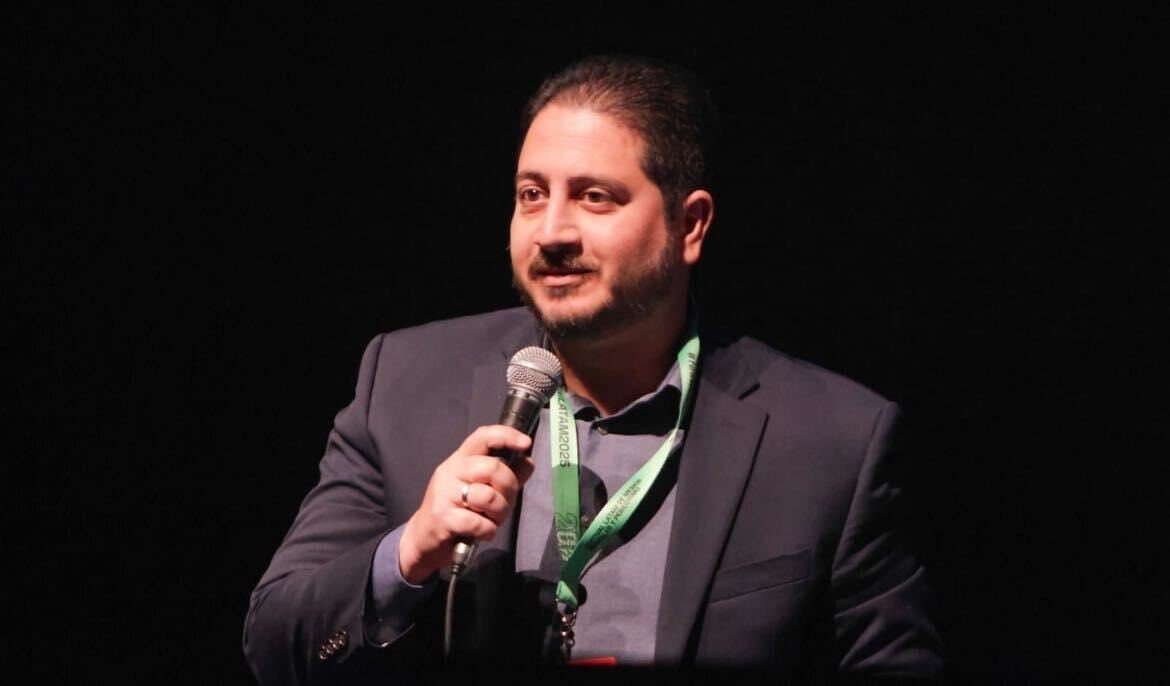
The International Center for Journalists (ICFJ) announced on Thursday, June 18, 2026, that José Jasán Nieves, editor-in-chief of elTOQUE, is one of the two recipients of the 2026 ICFJ Knight International Journalism Award. The award, considered one of the most prestigious honors in global journalism, will be presented on November 10 in Washington, D.C., during the U.S. capital’s premier international media dinner.
The ICFJ recognized José Nieves for leading, from exile, a transnational newsroom that has become an essential source of information for Cubans both on and off the island, operating in one of the world’s most repressive media environments. The jury highlighted in particular two initiatives: elTOQUE‘s informal market exchange rate tracker, a primary reference for millions of people, and La Travesía, the project that documents and names missing Cuban migrants so that their stories are not lost along with them.
Judge Maral Jekta, director of the JX Fund (the European Fund for Journalism in Exile) explained her assessment:
“What impresses me about José Jasán Nieves is the breadth of what he creates. The exchange rate tracker has become something many Cubans, who no longer have any other reliable point of reference, depend on in very practical ways. And then there is La Travesía, which does something even more fundamental: it gives names and faces to missing migrants, so that their lives and stories do not disappear with them. The fact that he does both, while also sharing his knowledge with the broader exile media community, is what makes him such an extraordinary figure in this field.”
Sharon Moshavi, president of the ICFJ, underscored the personal risks involved in this work:
“José and Zeinab—the other honoree, Sudanese journalist Zeinab Mohammed Salih—report in two of the most dangerous environments in the world for journalism, at great personal risk. Yet both choose every day to do this important work.”
Reacting to the announcement, José Nieves said:
“I’m beyond words since learning about this decision. I accept this award as a recognition of the extraordinary team at elTOQUE, of Cuban independent journalism, and of the community of exiled journalists, whose inspiration and energy motivate me every day. I am truly honored, from the bottom of my heart.”
José Jasán Nieves is only the second Cuban to receive the award in nearly three decades of the prize’s history. The award is sponsored by the Knight Foundation, a U.S.-based organization that invests in independent journalism as a means of strengthening democracy. Yoani Sánchez, blogger and director of the digital newspaper 14ymedio, who continues to navigate censorship, arrests, and internet restrictions from within Cuba in order to document everyday life under the communist regime, was the first Cuban journalist to receive this award in 2015.
The ICFJ Knight Award is the second prize José Nieves has received this year on behalf of the elTOQUE team. In April 2026, the Craig Newmark Graduate School of Journalism at CUNY honored him with the Vivek Shah Executive Leadership Alumni Award, which recognizes alumni of its executive leadership program who have made an extraordinary impact on their careers and on the journalism industry. The ceremony is scheduled for September 30 as part of the New York-based journalism school’s 20th anniversary celebrations.
Beyond its journalistic achievements, elTOQUE also plays an important role in strengthening the global ecosystem of independent media in exile. In 2025, the outlet became a core member of the Network of Exiled Media Outlets (NEMO), an international peer-to-peer and advocacy network that supports independent media organizations operating under conditions of exile, censorship, and crisis.
After a year of active collaboration, including participation in knowledge-sharing sessions and the development of resources for exiled newsrooms, elTOQUE was invited to join NEMO’s core membership, taking on responsibilities in shaping the network’s strategic direction and representing the interests of exiled media internationally. This reflects elTOQUE‘s longstanding commitment not only to producing rigorous journalism about Cuba, but also to contributing to the resilience and sustainability of the broader exiled media ecosystem.
An Award-Winning Career
These two recognitions in 2026 are part of a longer history of external validation for the work of elTOQUE and Mas Voces Foundation.
In 2019, elTOQUE won the Online Journalism Award from the Online News Association in the category of Explanatory Reporting for Small Newsrooms for “The Cuba to Come…“, a transmedia project created to accompany Cuba’s 2018–2019 constitutional reform process. The project combined interactive resources, public debates, offline distribution, and mobile app coverage to reach users in Cuba without internet access.
In 2021, the Inter American Press Association (IAPA/SIP) awarded elTOQUE its Excellence in Journalism Award in the Photography category for the image Three Sweet Potatoes (Tres boniatos) by Sadiel Mederos Bermúdez. On that occasion, the chair of the IAPA Awards Commission praised the Cuban journalist’s “courage and journalistic rigor.”
In 2023, the Latin American Studies Association (LASA) presented its LASA Media Award to José Jasán, on behalf of the outlet, in recognition of its “journalistic rigor in reporting on issues of considerable social impact in Latin America, based on hard data and nonpartisan analysis,” as well as its “great capacity for innovation in investigative journalism techniques and diverse multimedia formats.”
In 2024, the investigation Cuba’s Mission in Angola (Misión de Cuba en Angola), published by elTOQUE in collaboration with CONNECTAS and reported by Annarella Grimal, received an Honorable Mention in the Javier Valdez Award, organized by the Institute for Press and Society (IPYS) and presented during the Latin American Conference on Investigative Journalism (COLPIN) in Madrid. The investigation exposed the multimillion-dollar revenues generated by Cuba’s commercial network in Angola.
The international recognition of independent Cuban journalism
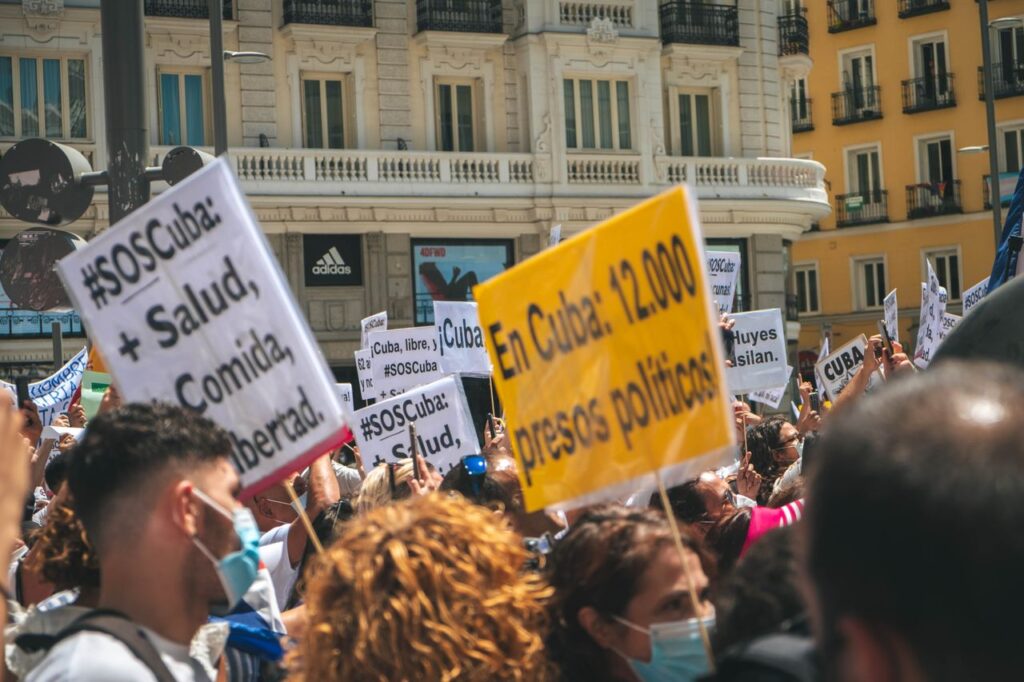
Over the past decade, independent Cuban journalism has amassed an unprecedented international track record, built under conditions of repression, illegality, and extremely limited resources.
The institutional starting point was marked by Elaine Díaz, who in 2014–2015 became the first Cuban journalist to receive a Nieman Fellowship at the Nieman Foundation for Journalism at Harvard University, one of the world’s most prestigious journalism training programs. Out of that experience emerged Periodismo de Barrio in 2015, a news outlet that quickly accumulated international recognition.
In 2018, journalist Julio Batista Rodríguez won the King of Spain International Journalism Award in the category of Environmental Journalism and Sustainable Development for the report The Dead Waters of Havana Club (Las aguas muertas del Havana Club), published in Periodismo de Barrio. The story documented the environmental impact of waste discharges from Cuba’s largest distillery on the ecosystem of Chipriona Bay—a report produced from within the island and recognized by both the EFE News Agency and the Spanish Agency for International Development Cooperation (AECID). The award was presented by the King of Spain in Madrid.
That same period, the Gabo Award—the most important prize in Ibero-American journalism—recognized an independent Cuban media outlet for the first time when Jorge Carrasco, from El Estornudo, won the Text category in 2017. In 2016, a piece by Mónica Baró for Periodismo de Barrio had already been a finalist in the same competition. In 2019, Baró won the Gabo Award in the Text category with Blood Was Never Yellow (La sangre nunca fue amarilla), also published in Periodismo de Barrio, accompanied by an acceptance speech that became emblematic:
“This award is for Cuba, for independent journalism, for everyone who believes in freedom of the press and freedom of expression.”
Several recognitions converged in 2022. Abraham Jiménez Enoa received the CPJ International Press Freedom Award—becoming the fourth Cuban to do so, following Jesús Díaz Hernández (1999), Manuel Vázquez Portal(2003), and Héctor Maseda Gutiérrez (2008). He also won the IAPA Award in the Opinion category for the article Cuba Is a Dictatorship, published in Gatopardo. In that same edition of the IAPA awards, Bárbara Maseda was recognized in the Investigative Journalism category for her participation in the Pandora Papers. Also in 2022, Luz Escobar, of 14ymedio, won the El Mundo International Journalism Award in the Press Freedom category.
Each of these recognitions has come from different institutions, with different juries, in different years. What they all have in common is the same conclusion: that rigorous journalism about Cuba is possible, necessary, and matters.
___________________________________________________________________________
This article was originally published on elToque’s website. It has been edited and republished in this space with the appropriate permissions, translated into English with the assistance of AI, and reviewed for accuracy by our journalists.